+91 8401451216



 October 15, 2026
 10 Min Read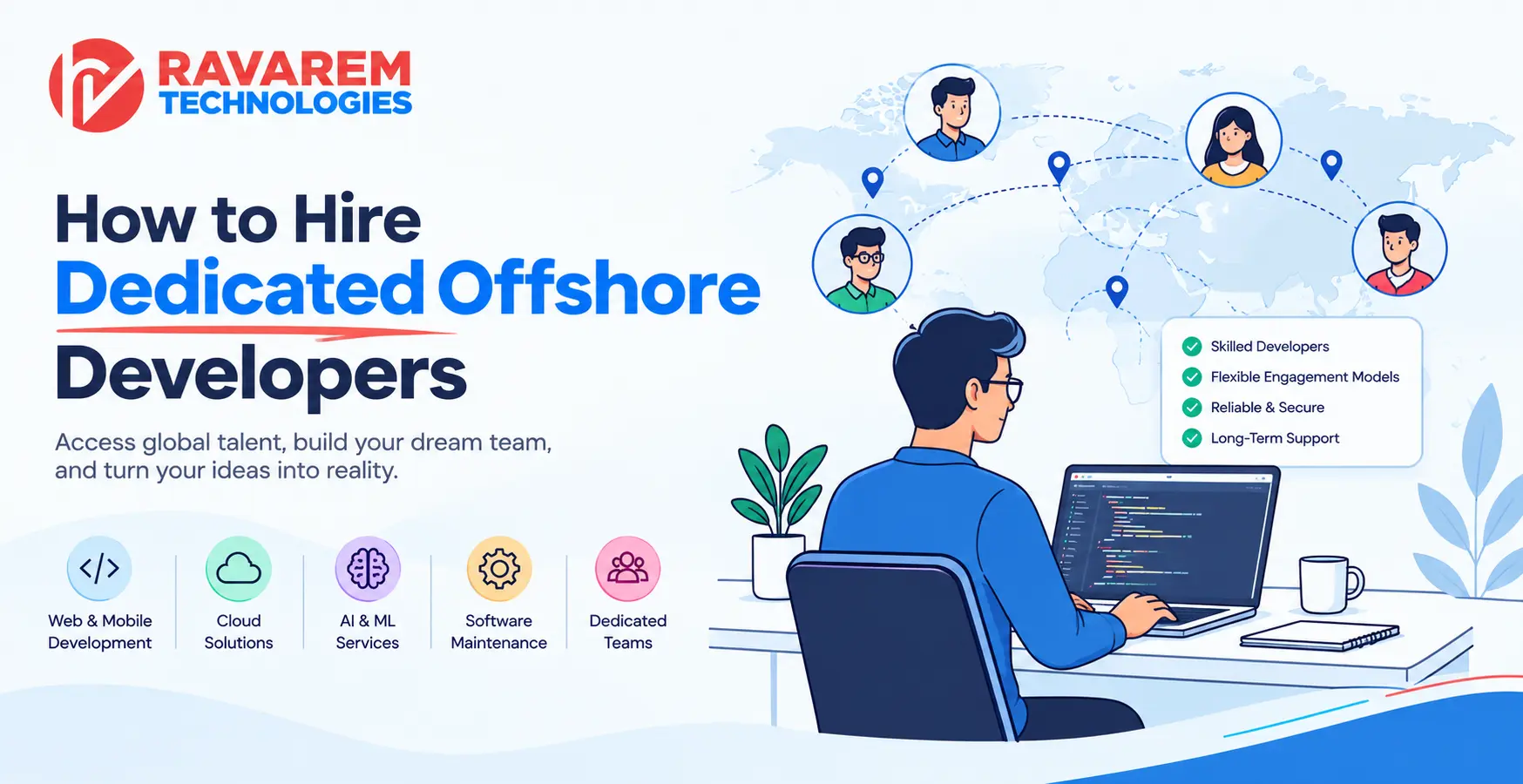
Hiring the right developers can help your business launch products faster, improve existing software, and keep pace with changing customer expectations. However, finding experienced technical talent in the United States can be challenging when budgets are tight or specialized skills are difficult to source. That is why many U.S. businesses, including startups and established companies in Atlanta, are exploring ways to hire dedicated offshore developers.
This approach gives businesses access to global engineering talent while allowing them to build teams around specific technical and business goals. The key is knowing how to evaluate candidates, choose a reliable partner, and establish a working arrangement that supports long-term success. This guide explains how to hire offshore developers, what to look for, and how to get the most value from your team.
What Is Offshore Software Development?
Offshore software development is a business arrangement in which a company works with software developers or a development team located in another country. The team may build applications, maintain existing systems, develop new features, or support broader technology initiatives.
Businesses can hire individual offshore developers, add specialists to an existing team, or establish a dedicated team through a development partner. For companies that need ongoing engineering capacity, an offshore development center (ODC) can provide a more structured arrangement in which developers work as an extension of the in-house team.
For example, a company in Atlanta might partner with an offshore development provider in India to build a SaaS platform, develop a mobile application, or modernize legacy software. The right arrangement depends on the project scope, management needs, and long-term plans.
How to Hire Offshore Dedicated Developers: 12 Essential Steps
Finding the right developers involves more than reviewing resumes or comparing hourly rates. Use these 12 steps to identify suitable talent, reduce hiring risks, and build an effective offshore development team.
1. Define Your Project Requirements
Start by identifying what you want your offshore developers to accomplish. Outline your business objectives, project scope, expected deliverables, timeline, and technical requirements.
Determine whether you need frontend developers, backend engineers, mobile app developers, DevOps specialists, QA engineers, or a combination of roles. Also consider whether you need one specialist or a complete development team.
A clear project brief helps potential partners recommend the right talent and provide more realistic cost and delivery estimates.
2. Choose the Right Hiring Model
Before you hire offshore dedicated developers, decide how you want the engagement to work. Different offshore development center models offer different levels of flexibility, management responsibility, and long-term commitment.
- Dedicated team model: Suitable for ongoing development and long-term product roadmaps.
- Staff augmentation: Best when your existing team needs additional developers or specialized skills.
- Project-based model: Appropriate for clearly defined projects with agreed deliverables.
- Managed development model: Useful when you want a provider to manage development activities and delivery.
- Build-operate-transfer (BOT): Relevant when you plan to establish and eventually operate your own offshore development center.
Choosing the right model helps establish clear responsibilities from the beginning.
3. Select a Suitable Offshore Location
Consider talent availability, technical expertise, operating costs, time-zone differences, language proficiency, and the local business environment when evaluating countries.
India is one option for U.S. businesses seeking offshore software development talent across web development, mobile applications, cloud engineering, AI, and other technical disciplines. However, the right location depends on your requirements rather than geography alone.
For Atlanta-based businesses, establish a practical schedule for meetings, code reviews, and urgent discussions. Even when teams work in different time zones, agreed communication windows can keep projects moving.
4. Research Offshore Software Development Companies
If you do not have an internal recruitment team for international hiring, partnering with an experienced provider can simplify the process.
Research offshore software development companies and examine their service offerings, technical specializations, delivery processes, and experience with similar projects. Review client testimonials, case studies, professional profiles, and relevant work samples.
Ask prospective providers how they recruit developers, assess technical skills, replace team members when necessary, and support long-term engagements. A credible partner should be able to explain its process clearly rather than relying only on broad promises.
5. Evaluate Technical Skills and Experience
Technical ability should be one of your primary selection criteria. Match candidates’ experience to your technology stack, architecture, and project requirements.
For example, a cloud migration project may require AWS or Azure experience, while an application development project may need expertise in React, Node.js, Python, Java, or mobile frameworks.
Use structured technical interviews, practical coding exercises, architecture discussions, or code reviews where appropriate. Ask candidates to explain how they have solved real development problems and handled technical trade-offs.
Avoid relying on resumes alone. Practical assessments provide better insight into how candidates approach the work.
6. Check Communication and Collaboration Skills
Offshore developers need to communicate progress, explain technical decisions, ask questions, and identify problems early. Strong technical skills are valuable, but poor communication can create delays and misunderstandings.
Assess written communication, spoken English where relevant, documentation habits, and willingness to raise concerns. Discuss how candidates handle unclear requirements, changing priorities, and feedback.
For U.S. companies, confirm overlapping working hours and agree on tools for messaging, video meetings, task tracking, and documentation. Set expectations for response times and escalation procedures before development begins.
7. Verify References and Previous Work
Before making a final decision, validate candidates’ experience and the provider’s delivery history. Request relevant project examples, professional references, or demonstrations of work that can be shared legitimately.
Ask previous clients about code quality, reliability, communication, adherence to deadlines, and how the team handled unexpected challenges.
Where confidentiality prevents a provider from sharing project details, look for alternative evidence, such as anonymized case studies or a technical demonstration. Protect your own confidential information during the evaluation process as well.
8. Understand Pricing and Contract Terms
The cost of offshore development depends on factors such as experience, location, technology specialization, engagement model, and project complexity.
Compare proposals based on the full cost of the engagement, not just the developer’s hourly rate. Clarify billing arrangements, minimum commitments, overtime, leave coverage, onboarding fees, replacement policies, and any additional project management costs.
Your contract should also define deliverables, responsibilities, confidentiality, intellectual property ownership, termination conditions, and dispute resolution. For U.S. businesses, have appropriate legal and security professionals review the agreement when needed.
9. Review Security and Data Protection Practices
Security should be part of the hiring decision from the start, especially when developers will access customer data, production systems, or proprietary source code.
Ask how the provider manages access permissions, authentication, code repositories, device security, backups, vulnerability management, and incident reporting. Determine whether the proposed arrangement meets your contractual and regulatory obligations.
Use least-privilege access, documented security procedures, and appropriate confidentiality and intellectual property agreements. If your business handles regulated data, assess the relevant compliance requirements before granting access.
10. Start With a Trial or Small Initial Assignment
Before committing to a large team, consider a limited assignment or pilot project. This allows you to assess code quality, collaboration, documentation, responsiveness, and the provider’s ability to meet agreed expectations.
Choose a task with clear acceptance criteria and a manageable scope. Evaluate the actual work, not just how smoothly the initial sales conversations went.
A successful pilot can help you refine workflows and identify potential problems before increasing the team’s responsibilities.
11. Establish Clear Onboarding and Management Processes
Once you hire offshore dedicated software developers, give them the information and access needed to work effectively. Provide product documentation, architecture details, coding standards, development environments, and an overview of your business objectives.
Assign a clear point of contact and define responsibilities for technical decisions, code reviews, approvals, and release management. Establish regular check-ins and use shared project management tools to track progress.
Avoid micromanagement. Set clear goals, make priorities visible, and give developers the context they need to make sound decisions.
12. Measure Performance and Plan for Growth
After onboarding, review team performance using meaningful indicators. Depending on the engagement, these may include delivery against agreed milestones, defect trends, code review quality, cycle time, system reliability, and stakeholder feedback.
Avoid judging developers solely by lines of code or the number of tasks completed. Measures should reflect quality, maintainability, collaboration, and business outcomes.
As your requirements grow, reassess team composition, responsibilities, and capacity. A regular review process helps you identify skill gaps, address delivery risks, and decide when to expand or restructure the team.
Explore the Benefits of Hiring Offshore Dedicated Developers
Hiring offshore developers can offer several advantages when the engagement is planned carefully and managed effectively.
1. Access to a Broader Talent Pool
Offshore hiring gives businesses access to technical professionals beyond their local recruitment market. This can be particularly useful when companies need specialized expertise in AI, cloud engineering, cybersecurity, mobile development, or other in-demand fields.
2. Flexible Development Capacity
Businesses can expand their engineering capacity based on project requirements. A dedicated team can support ongoing product development, while additional specialists can help address temporary skill gaps or demanding delivery schedules.
3. Potential Cost Efficiency
Working with offshore developers may reduce some development costs compared with building an equivalent team locally. However, savings depend on experience, management overhead, infrastructure, and the engagement model. Compare total operating costs rather than assuming offshore hiring is automatically cheaper.
4. More Focus on Core Business Activities
A well-integrated offshore team can take responsibility for agreed development tasks, allowing internal leaders to focus on product strategy, customer relationships, sales, and other priorities. This works best when ownership and communication processes are clearly defined.
5. Support for Faster Development Cycles
Adding qualified developers can increase the capacity available for feature development, testing, and maintenance. Teams working across time zones may also be able to continue certain tasks outside local business hours, provided handoffs and workflows are well coordinated.
6. Long-Term Product Knowledge
Dedicated developers who remain with a project can develop a deeper understanding of its architecture, business logic, and users. This continuity can improve collaboration and reduce the need to repeatedly explain project context.
Top Offshore Development Trends to Consider
Several offshore development trends are shaping how businesses build distributed engineering teams. These include AI-assisted development, cloud-native engineering, stronger security practices, automation, and demand for specialized technical skills.
Companies are also placing greater emphasis on long-term partnerships rather than treating offshore development as a simple way to outsource individual tasks. Dedicated teams increasingly work alongside internal product managers, designers, and engineers.
When evaluating providers, consider whether their skills and delivery practices align with your technology roadmap. If your goal is to establish a long-term operation, understanding how to set up an offshore development center can help you plan recruitment, infrastructure, security, governance, and ongoing team management.
Conclusion
Hiring offshore dedicated developers can help U.S. businesses access specialized talent, increase engineering capacity, and support long-term product development. The best results come from defining your requirements, selecting the right engagement model, evaluating technical and communication skills, and establishing clear expectations around security, delivery, and ownership.
For businesses in Atlanta and across the United States, the right offshore partner should offer more than access to developers. Look for a team that understands your objectives, communicates consistently, and can adapt as your needs change. Take time to compare providers, verify their experience, and begin with a well-defined scope. A thoughtful hiring process can turn an offshore development team into a reliable extension of your business.