+91 8401451216



 October 9, 2026
 6 Min Read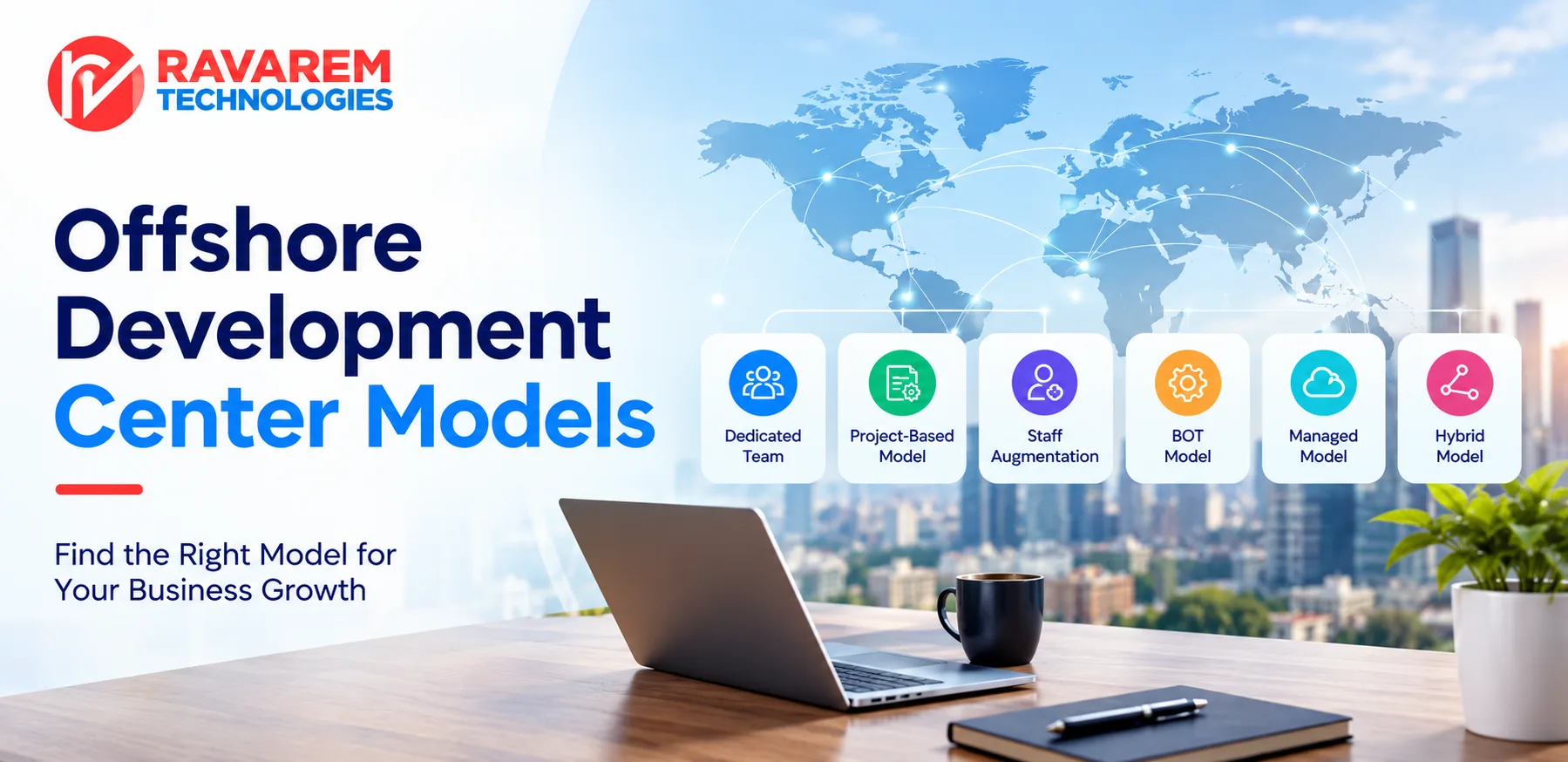
Building a strong technology team is essential for businesses that want to innovate, improve efficiency, and stay competitive. However, hiring skilled developers in the United States can be expensive, and finding the right talent at the right time is not always easy. This is why many U.S. companies are exploring offshore development services to expand their technical capabilities, manage development costs, and accelerate project delivery.
An offshore development center (ODC) gives businesses access to skilled professionals in another country while allowing them to maintain control over projects, workflows, and quality standards. However, not every business needs the same setup. Understanding the main offshore development center models can help you choose an approach that fits your budget, project scope, and long-term growth plans.
What Is an Offshore Development Center?
An offshore development center is a dedicated team or operational setup located in another country that handles software development and related technology functions for a business. It may operate as an extension of the company’s in-house team or work through an external development partner.
For example, a company based in Atlanta might work with developers in India to build applications, maintain software, or manage ongoing product development. The arrangement can range from hiring a few specialists for a short-term project to establishing a dedicated team that supports long-term business goals.
What Are the Main Offshore Development Center Models?
The right offshore development center model depends on how much control you need, how long you require the team, and whether you want to manage recruitment and operations yourself. Here are the most common options.
1. Dedicated Team Model
Under the dedicated team model, a business works with a team of offshore developers assigned to its projects over an extended period. The team may include software engineers, designers, quality assurance specialists, project managers, and other technical professionals.
Best for: Businesses with ongoing development needs, complex products, or long-term technology roadmaps.
Key benefits: The team gains a deeper understanding of your products, processes, and goals over time. This can improve collaboration, maintain consistency, and make it easier to scale the team as requirements change.
For U.S. companies planning continuous product improvements, this model offers a practical way to build lasting development capacity without recruiting every role locally.
2. Project-Based Model
In the project-based model, a business hires an offshore development provider to deliver a clearly defined project within an agreed scope, budget, and timeline. The provider typically manages the development team and coordinates delivery.
Best for: Businesses with specific projects, defined deliverables, or limited internal development resources.
Key benefits: This model offers a clear starting point, defined responsibilities, and easier budget planning when requirements are stable. It can work well for building a website, developing an application, or implementing a particular software feature.
However, frequent changes in scope can affect cost and delivery timelines. Businesses should establish clear requirements, milestones, and acceptance criteria before development begins.
3. Staff Augmentation Model
Staff augmentation allows a company to add offshore professionals to its existing team. Instead of transferring an entire project to an external provider, the business brings in specific skills to address resource gaps.
Best for: Companies that already have an internal technology team but need additional developers, specialized expertise, or temporary support.
Key benefits: Businesses can fill skill gaps, increase development capacity, and respond to changing workloads without committing to permanent hires. The company generally retains day-to-day direction of the augmented professionals, while the provider handles agreed employment and administrative responsibilities.
This model is especially useful when a U.S. team needs additional engineering support for a product launch or a demanding development cycle.
4. Build-Operate-Transfer (BOT) Model
With the build-operate-transfer model, an offshore partner establishes and manages a development operation before transferring it to the client under agreed conditions. The partner may initially handle recruitment, infrastructure, administration, and operational processes.
Best for: Businesses planning to establish their own offshore presence but wanting help with the initial setup.
Key benefits: BOT can reduce the initial burden of building an offshore operation from scratch. It also gives businesses time to establish processes, develop a team, and prepare for independent management.
The transfer stage should be planned carefully, including ownership of assets, employee arrangements, operational documentation, and transition responsibilities.
5. Managed Offshore Development Model
In a managed offshore development model, an external provider takes responsibility for managing the development team and agreed delivery activities. Depending on the contract, this may include project management, quality assurance, technical planning, reporting, and performance monitoring.
Best for: Companies that need development outcomes but have limited internal capacity to manage daily technical operations.
Key benefits: A managed arrangement can reduce the client’s day-to-day coordination workload and provide access to established development processes. It is important to define responsibilities, communication expectations, security requirements, and performance measures at the beginning.
Unlike staff augmentation, where the client generally directs the added professionals, a managed model places more operational responsibility with the provider.
6. Hybrid Offshore Model
The hybrid model combines offshore development resources with an in-house team and, in some cases, nearshore professionals. For example, a U.S. company might keep product strategy and stakeholder management in Atlanta while offshore developers handle engineering, testing, or maintenance.
Best for: Businesses that want a balance between direct oversight, specialized expertise, and flexible development capacity.
Key benefits: A hybrid structure can support collaboration across locations while allowing teams to divide responsibilities according to their strengths. Success depends on clear ownership, shared documentation, suitable collaboration tools, and agreed working hours.
How Do You Choose the Right Offshore Development Center Model?
Before selecting an offshore development center model, evaluate these five factors:
- Project duration: Choose project-based engagement for defined deliverables and a dedicated team for ongoing development.
- Management capacity: Consider staff augmentation if your internal team can manage developers, or a managed model if you need the provider to oversee delivery.
- Level of control: A dedicated team or hybrid setup may suit businesses that want close involvement in development.
- Budget and growth plans: Compare the full cost of recruitment, management, infrastructure, and long-term operations, not just developer rates.
- Future expansion: A BOT model may suit companies planning to establish their own offshore operation over time.
The best choice is the one that supports your business objectives, technical requirements, and preferred level of involvement.
Conclusion
Choosing between offshore development center models is not simply about finding the lowest development cost. It is about selecting a structure that aligns with your business goals, project requirements, management capacity, and long-term plans. A dedicated team can support ongoing product development, while project-based engagement suits defined deliverables. Staff augmentation fills skill gaps, managed development reduces operational oversight, and BOT helps businesses establish their own offshore presence.
For companies in Atlanta and across the United States, offshore development services can create opportunities to access global talent and expand technical capacity. Before making a decision, compare each model’s responsibilities, costs, security requirements, and scalability. A well-defined engagement model can help your business build a more effective and sustainable development partnership.