+91 8401451216



 October 5, 2026
 7 Min Read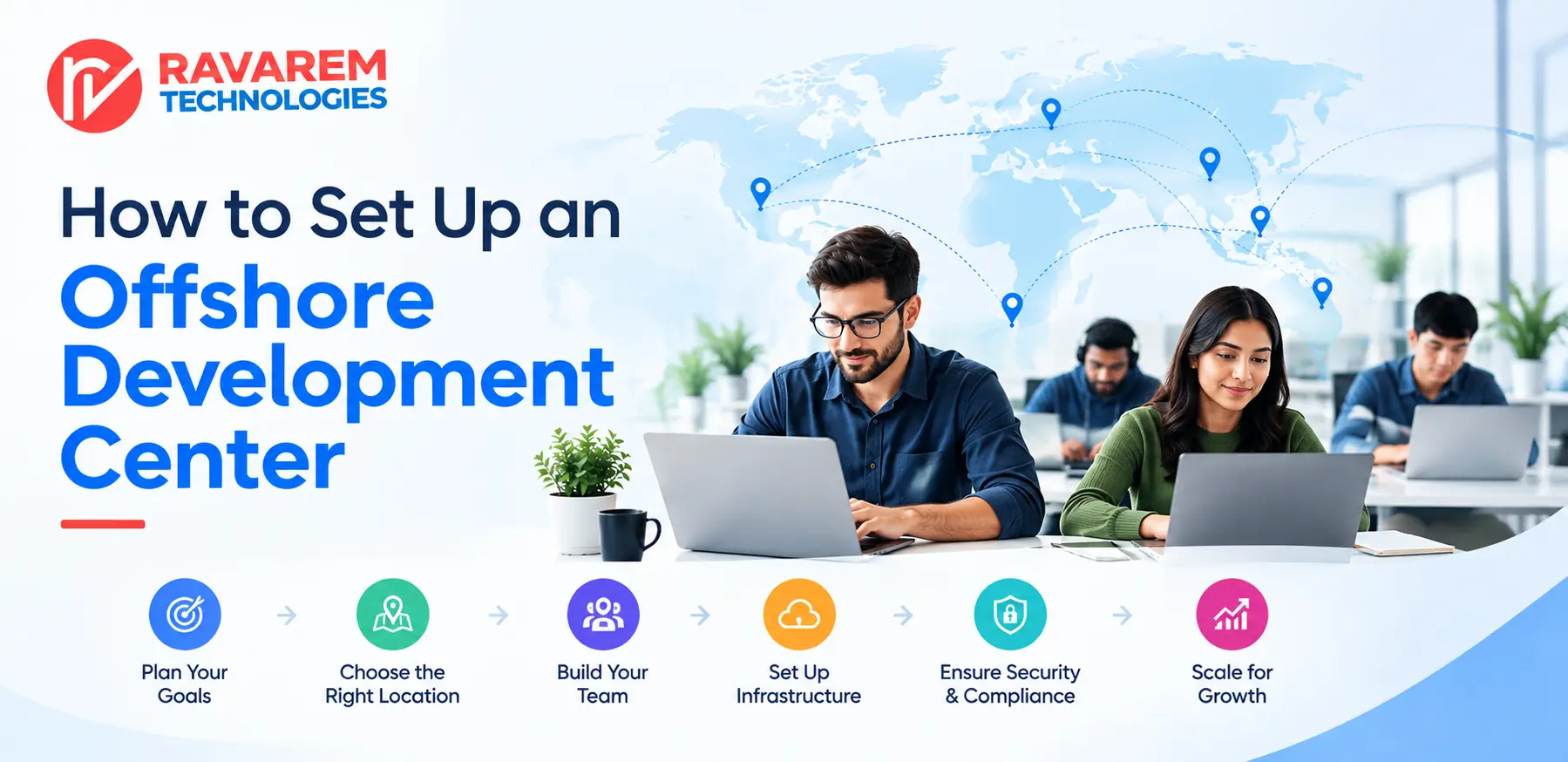
For U.S. companies, building a high-performing technology team does not always mean hiring every role locally. An offshore development center can provide access to specialized talent, flexible scaling, and dedicated engineering capabilities while supporting long-term technology goals. However, setting up an ODC requires more than finding developers in another country. Businesses need to plan their objectives, location, team structure, technology infrastructure, security, legal requirements, and operating processes. A well-planned approach can turn an offshore team into an extension of the U.S. organization rather than a disconnected outsourcing function. If you are researching how to set up offshore development center operations, the following guide outlines the major decisions and steps involved.
What Is an Offshore Development Center?
An offshore development center (ODC) is a dedicated technology team or facility established in another country to support a company’s software engineering and technology requirements. Unlike a short-term project outsourcing arrangement, an ODC is typically designed for ongoing collaboration and can operate as an extension of the company’s internal team.
An ODC may include software developers, QA engineers, UI/UX designers, DevOps engineers, cloud specialists, project managers, business analysts, and technical leads. The exact structure depends on the company’s goals, technology stack, project requirements, and preferred engagement model.
What Are Offshore Development Services?
Offshore development services cover a broad range of technology capabilities delivered by an offshore engineering team. Depending on business requirements, these services can include:
- Custom software development
- Web application development
- Mobile app development
- Front-end and back-end development
- UI/UX design
- Software testing and quality assurance
- Test automation
- Cloud development and migration
- DevOps and CI/CD
- Application modernization
- AI and machine learning development
- Data engineering and analytics
- Cybersecurity services
- Software maintenance and support
- Dedicated development team services
This flexibility allows a company to start with a focused engineering team and expand capabilities as its technology roadmap evolves.
What Does “ODC Setup” Mean?
ODC setup means establishing the people, processes, infrastructure, governance, legal framework, and technology environment required to operate an offshore development center successfully.
A complete setup typically covers location selection, business and legal considerations, team recruitment, infrastructure, security, communication, organizational structure, onboarding, pilot projects, and ongoing performance management.
How to Set Up an Offshore Development Center: Step-by-Step
1. Define Your Business and Technology Objectives
Start by determining why you want an ODC. Is the goal to access specialized talent, expand engineering capacity, accelerate product development, support digital transformation, or build a long-term technology operation?
Define measurable objectives, expected team size, technology requirements, budget, timeline, responsibilities, and success metrics before approaching providers.
2. Choose the Right Location
Location can significantly influence talent availability, operating costs, time-zone overlap, communication, infrastructure, and regulatory requirements.
For U.S. businesses considering how to set up an offshore development center in India, India is one option worth evaluating because of its large technology talent base and established global delivery ecosystem. However, the right location should ultimately be based on your specific technology needs, business objectives, security requirements, and operating model—not simply cost.
3. Select the Right ODC Model
Next, decide how you want the center to operate. Common options include a company-owned/captive model, Build-Operate-Transfer (BOT)x, dedicated provider-managed teams, or co-managed arrangements.
Your choice should reflect how much control you want over hiring, operations, infrastructure, intellectual property, and day-to-day management. BOT, for example, can allow a provider to establish and operate the center before ownership transitions to the client.
4. Evaluate and Select an ODC Partner
If you are working with an offshore provider, assess more than pricing. Review technical expertise, industry experience, recruitment capabilities, security practices, development methodologies, communication, infrastructure, client references, and scalability.
A technical assessment or pilot engagement can help validate whether the provider can meet your actual requirements before you commit to a larger operation.
5. Design the Team Structure
Define the roles your ODC needs and establish clear reporting relationships. Depending on your requirements, the initial team might include a technical lead, developers, QA engineers, DevOps specialists, designers, and project or product managers.
Create clear responsibilities for both U.S. and offshore teams so that decision-making, escalation, ownership, and collaboration are understood from day one.
6. Establish Legal, Security, and Compliance Frameworks
Before development begins, address contracts, intellectual property ownership, confidentiality, data protection, employment requirements, taxation, and applicable local regulations.
Security should also cover identity and access management, encryption, secure development practices, network controls, backups, monitoring, and incident response. Strong governance helps protect sensitive business information while establishing clear expectations between both teams.
7. Set Up Technology and Infrastructure
Build the technical environment required for productive and secure development. This may include workstations, cloud infrastructure, development environments, software licenses, version control, communication platforms, project management tools, testing environments, and secure network access.
The infrastructure should integrate with the systems already used by your U.S. organization rather than creating an isolated technology environment.
8. Recruit, Hire, and Onboard the Team
Recruit professionals based on technical capability, communication skills, cultural alignment, and long-term potential. A strong onboarding process should introduce the team to your products, architecture, coding standards, security requirements, business objectives, workflows, and company culture.
Continuous training and knowledge sharing can also help the ODC develop into a stronger long-term engineering capability.
9. Start With a Controlled Pilot
Instead of immediately building a large team, begin with a manageable project or core group of engineers. Establish clear deliverables and measure quality, productivity, communication, timelines, and stakeholder satisfaction.
Starting with a small pilot project allows the business to evaluate team performance, refine workflows, and resolve operational challenges before expanding the ODC.
10. Integrate Processes and Communication
An offshore team works best when it operates as part of the broader organization. Establish regular meetings, reporting routines, documentation standards, development workflows, code-review processes, escalation paths, and knowledge-sharing practices.
For U.S. companies, overlapping work hours can also be planned strategically to improve collaboration across time zones.
11. Scale the ODC Gradually
Once the initial team demonstrates consistent performance, expand according to business demand. Add specialized engineers, new technology capabilities, QA resources, product roles, or additional teams as your roadmap develops.
A phased approach can reduce hiring risks and give leadership time to refine processes as the center grows.
12. Monitor Performance and Continuously Improve
ODC management does not end after the team is operational. Track relevant KPIs such as delivery timelines, defect rates, productivity, employee retention, development costs, quality, stakeholder satisfaction, and business outcomes.
Regular reviews can identify bottlenecks, training needs, process improvements, and opportunities to expand the center’s responsibilities.
How Long Does It Take to Set Up an ODC?
The timeline depends on the location, operating model, team size, legal structure, infrastructure requirements, and hiring needs. A smaller provider-managed team can become operational faster than a fully owned offshore center that requires extensive legal, infrastructure, and organizational setup.
The important point is to prioritize readiness and quality over speed. A rushed setup can create problems with hiring, security, communication, and governance that become more difficult to fix after the team scales.
Conclusion
Knowing how to set up offshore development center operations is only the first step. The long-term success of an ODC depends on how well its people, technology, processes, security, and business objectives work together. For U.S. businesses, the right approach can create access to global engineering talent while providing a scalable extension of the internal technology organization.
Whether you are considering an ODC in India or another technology hub, begin with clear objectives, evaluate locations carefully, select the appropriate operating model, and establish strong governance from the start. A phased implementation, controlled pilot, structured onboarding, and continuous performance management can help transform an offshore development center into a reliable long-term technology capability.